Local Knowledge · 8 min read
What Happens to Your Smart Home During a Power Outage or PSPS Shutoff?
Public Safety Power Shutoffs are a fact of life on the South Coast. What actually keeps working, what doesn't, and how to design a home that rides through an outage gracefully.
If you live in the Santa Barbara area, you've lived through it: red-flag winds pick up, Southern California Edison announces a Public Safety Power Shutoff, and entire neighborhoods go dark — sometimes for hours, sometimes for days. For most homes it's an inconvenience. For a technology-rich home that wasn't designed for it, it can mean dead gates, blind cameras, offline WiFi, and a control system that comes back up confused.
None of that is inevitable. Outage behavior is a design decision, and it's one we engineer into every Firebird system. Here's how to think about it.
What dies first — and why it matters
- Your internet and WiFi: the modem, router, switches, and access points all need power. Even if your laptop has battery, the network it depends on doesn't — unless it's on backup.
- Cameras and video doorbells: no power, no surveillance — exactly when you'd most like eyes on the property.
- Gates and garage doors: motorized entry without battery backup leaves you opening things by hand (every gate should have a manual release — do you know where yours is?).
- The control system: processors and touch panels go down with everything else. The real question is how gracefully they come back.
The resilience hierarchy
We design backup power in tiers, matched to how long outages actually run here:
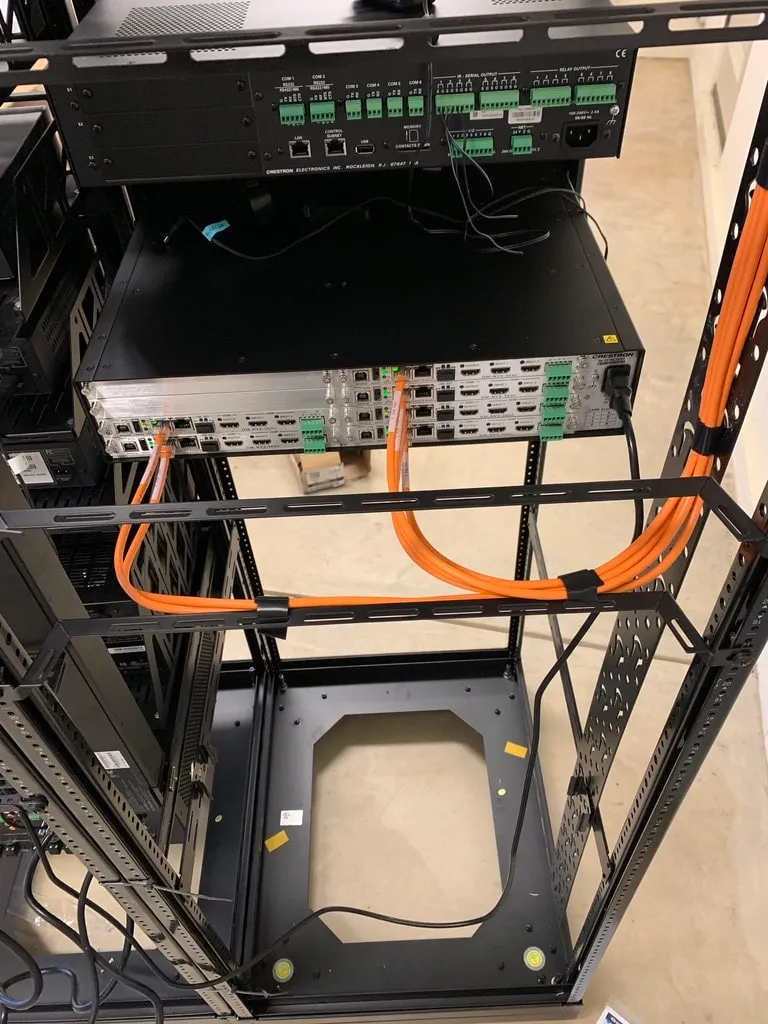
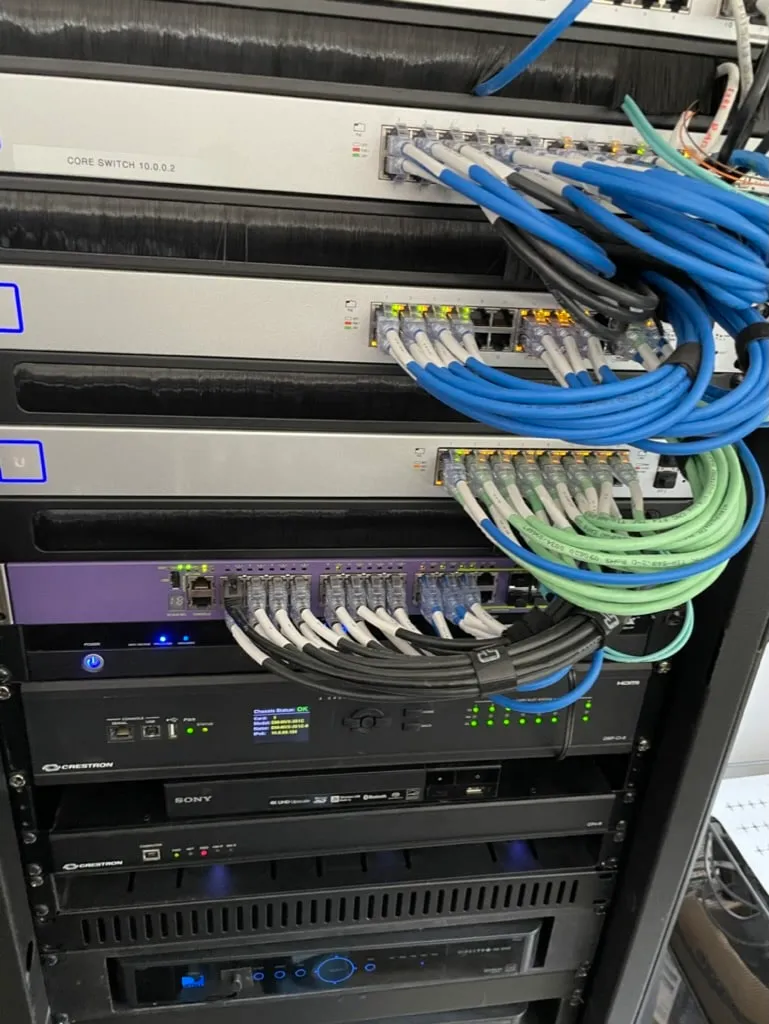
- Tier 1 — UPS on the rack (every project): a properly sized uninterruptible power supply keeps the network, control processor, and cameras alive through short outages and — just as important — conditions power and allows clean shutdowns so equipment isn't damaged by surges when the grid returns.
- Tier 2 — extended battery for critical loads: dedicated battery capacity for the network closet, surveillance, gates, and a few key lighting circuits keeps the essentials running for many hours. This is the sweet spot for PSPS events.
- Tier 3 — whole-home battery or generator integration: for estates, we integrate standby generators or whole-home batteries with the control system, so the transition is automatic and the home simply keeps working. Modern platforms can even shed non-essential loads intelligently.
The part everyone forgets: coming back up
More equipment is damaged by power returning than by power going out — and more service calls come from systems that restarted in the wrong order than from the outage itself. A network switch that boots before the modem, a controller that boots before the network, and suddenly 'nothing works' even though nothing is broken. We solve this with sequenced power-up: rack components restart in a deliberate order with deliberate delays, automatically. If your current system needs a service visit after every outage, that's a design flaw — and a fixable one.
A South Coast checklist
- UPS on the network and control rack, sized with real runtime — not a power strip with a battery.
- Cameras and recorder on backed-up circuits; verify remote access works on cellular when home internet is down.
- Battery backup and a known manual release on every gate and garage door.
- Sequenced power-up programming so the system restores itself without a service call.
- For new construction and remodels: plan generator or whole-home battery integration while the walls are open — it's dramatically cheaper than retrofitting.
Frequently asked
Will my smart home work during a power outage?+
Only the parts with backup power. A well-designed system keeps the network, control processor, cameras, and entry systems alive on UPS or battery, so the essential functions ride through. Without backup, everything goes dark together — and often restarts badly when power returns.
What is a PSPS shutoff?+
A Public Safety Power Shutoff — a planned outage utilities like Southern California Edison use during high-wind, high-fire-risk weather. In the Santa Barbara area they can last from hours to days, which is why we size backup power for real runtimes, not just momentary blips.
Do WiFi and cameras work when the power is out?+
Only if the modem, router, switches, access points, and cameras are on battery or UPS power. Internet service itself usually stays up during a local outage (the provider's network is separately powered), so a backed-up network typically keeps the home online.
Why does my AV system break every time the power flickers?+
Almost always a restart-order problem: components boot in the wrong sequence and can't find each other. Sequenced power-up — rack equipment restarting in a deliberate order — fixes it permanently. It's standard on every Firebird rack.
Should I get a generator or a battery for my smart home?+
For most homes, a properly sized UPS plus extended battery for critical loads covers PSPS events. Estates and homes with medical or refrigeration needs benefit from a standby generator or whole-home battery, integrated with the control system for automatic, graceful transitions. We design all three tiers.